


Kronenplatz in Karlsruhe is one of the hottest spots in the city centre: it lacks shade, greenery and cooling features. This is where the ‘Kronenplatz Effect’ project comes in. Working directly on site, an interdisciplinary team comprising experts in architecture, regional studies and meteorology is investigating how public spaces can remain liveable despite rising temperatures. Using climate sensors, temperature and humidity are measured on a small scale, whilst the impact and public acceptance of design measures are examined. Kronenplatz is thus becoming a real-world test bed where science, design and the urban community are working together to develop solutions for climate-resilient urban spaces.
Learn more
In Karlsruhe’s Südstadt district, ra:ve is exploring how students, researchers and the wider community can work together to develop new building blocks for socially inclusive and environmentally sustainable urban design. The focus is on topics such as the design of public spaces and the processes involved in negotiating their shared use, affordable housing, neighbourhood networks, mobility and transport. The real-world laboratory aims to bring together different perspectives on these issues and to foster ongoing dialogue about shared visions for life in the neighbourhood.
Learn more
In the project seminar ‘Transformative urban research in the neighbourhood’, students work on a research project in Karlsruhe’s Südstadt district. They develop their own research design, select appropriate methods and carry out empirical surveys. Real-world experiments are planned based on actual needs within the neighbourhood. In this way, changes to the urban environment are tested and researched through small-scale interventions.
Learn more
European societies are in the midst of a transition from a fossil-fuel-based to a post-fossil-fuel energy supply. At the same time, the challenge of shaping a socially just green transition in the building sector is growing, given the strained housing markets, costly new technologies and the tangible effects of climate change in the Anthropocene. Consequently, social problems – such as energy poverty or health issues arising from housing conditions – are on the rise or becoming more acute. As part of the EU Horizon research project PREFIGURE, eight partners from academic and non-academic institutions are therefore investigating models for the transition to a socially equitable energy supply within the rental housing stock. Further information on the project can be found on the project website.
Visit the website
Launched in September 2024, NaWo-Collab brings together stakeholders from politics, business and civil society to promote sustainable housing, construction and renovation in the Upper Rhine region as part of the Sustainability Innovation Campus, which is funded by the Ministry of Science, Research and the Arts of the State of Baden-Württemberg. In the region of Germany most severely affected by climate change, NaWo-Collab is developing innovative solutions for energy-efficient refurbishment that are both climate-neutral and socially equitable. NaWo-Collab, developed jointly by KIT and the University of Freiburg, serves as a platform for the exchange of best practices and for bringing together stakeholders to find ways to reduce socio-spatial inequalities.
Learn more
Wealth & Space ist ein kollaboratives Forschungsprojekt, zwischen KIT, HU Berlin, Colmex, UnB und UdeChile, das von der Volkswagen-Stiftung finanziert wird. Das Projekt untersucht den Zusammenhang zwischen der Akkumulation von Wohlstand und der (Re)produktion von Raum in Lateinamerika. Durch die Einführung räumlicher Dimensionen in die Reichtumsforschung schließt Wealth & Space wichtige Wissenslücken darüber, wie sich der zeitgenössische Kapitalismus im und über den Raum erstreckt.
Zur Webseite
CONTESTED_TERRITORIES is a network of more than 20 European and Latin American partners who, through an intensive exchange programme, not only develop new insights into contested human–environment relationships in terms of content and concept, but also bring these to the attention of a wider audience through cultural performances, thereby helping to strengthen locally rooted cultural systems of meaning.
Visit the website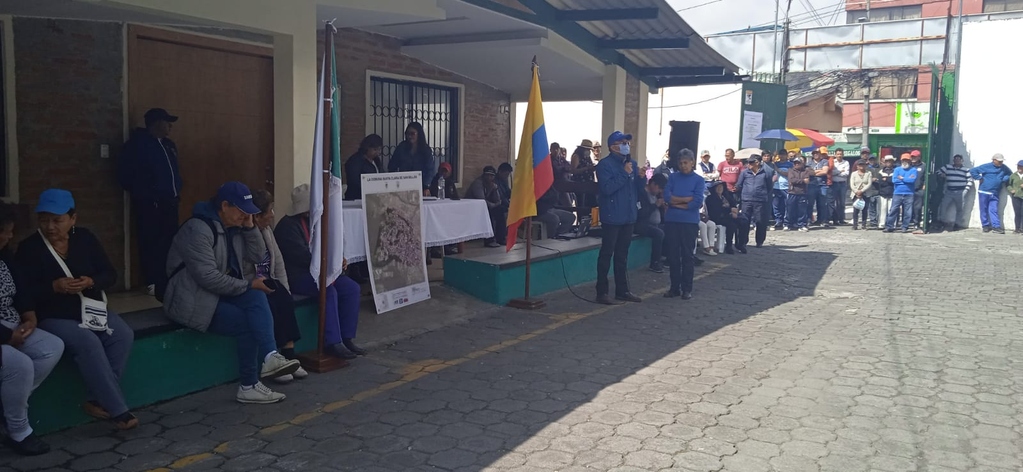
CoprodAction aims to gain a better understanding of how people shape, negotiate, envisage and jointly manage their environment. The main objective of CoprodAction’s research is therefore to understand the extent to which the use of collaborative practices influences or contributes to improving quality of life and to the co-production of a more sustainable and resilient urban environment.
Learn more
On behalf of the Ministry of Food, Rural Affairs and Consumer Protection, the research project “Land.lebendig denken” is developing a strategy for the resilience of rural areas in Baden-Württemberg. In order to collect data on their resilience, the rural areas are categorised using a data-based classification system; furthermore, the public is being involved through participatory initiatives in selected local communities. The research project is accompanied by a podcast in which experts from the worlds of politics, academia and practice share their knowledge and experiences on the topic of resilience. The aim of the project is to establish a scientific evidence base on the resilience of rural areas, which can also be incorporated into the revision of the Baden-Württemberg Regional Development Plan.
Learn more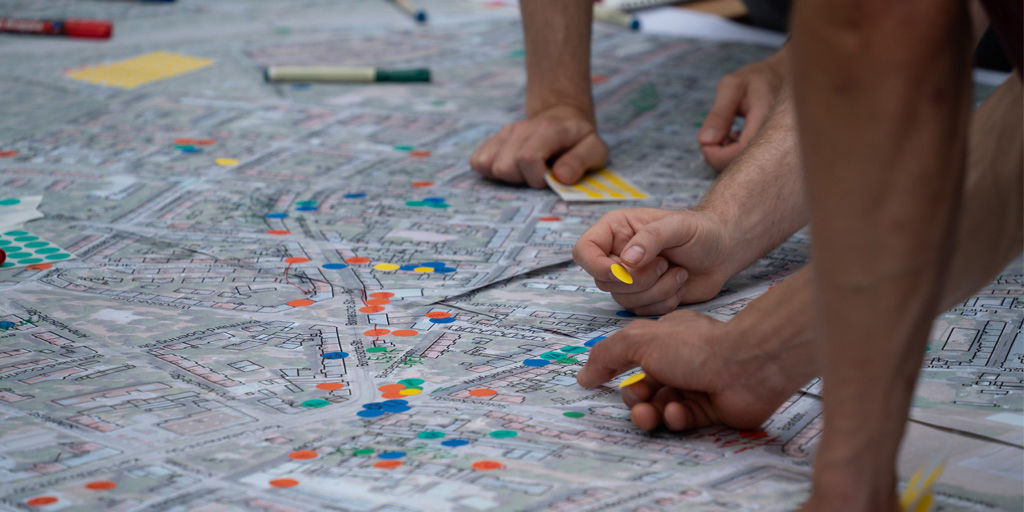
The research project ‘Who owns Connewitz?’ aims to bring greater transparency to the ownership structures in the Leipzig neighbourhood of Connewitz and to find out how different types of landlords treat their tenants. It also explores how living conditions for residents can be improved and how they can be brought together.
Learn more
Diesen Sommer bilden wir einen zweiten Jahrgang an Nachwuchs-Stadtforscher:innen aus. Studierende der Regionalwissenschaft/ Raumplanung und Studierende des Begleitstudiums Nachhaltige Entwicklung (ZAK) entwickeln Forschungsfragen zu spannenden und relevanten Themen in der Südstadt: Öffentlicher Raum und Verkehr, Grünräume und Gentrifizierung. Mehr zum Lehrforschungsprojekt gibts hier!
Weitere Infos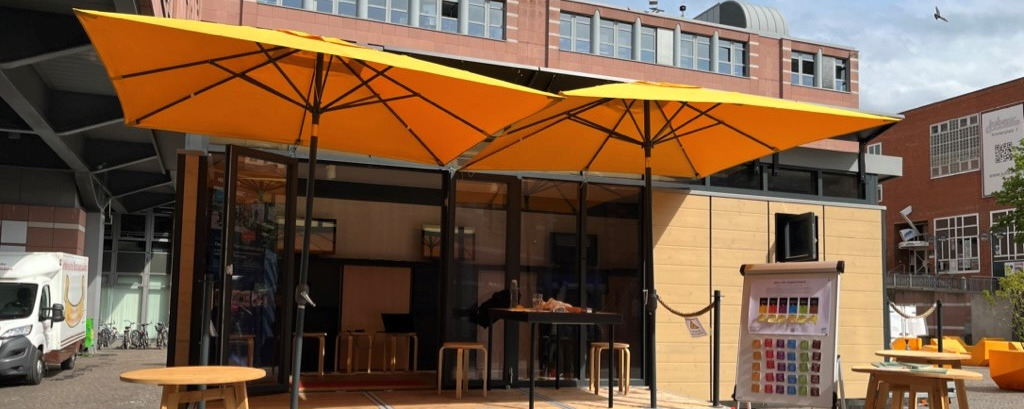
In the annual course ‘Shaping the City Together: An Interactive CitizenLab with Karlsruhe’s Südstadt’, students of Regional Science and Spatial Planning at the Institute for Regional Studies (IfR) explore methods for participatory urban research based on their own research topics. Residents and stakeholders from Karlsruhe’s Südstadt are actively involved in the research.
Learn more
IECO is a network project designed to develop and establish a research framework focusing on industrial ecology in Chile. As a binational and multilateral institute, IECO aims to conduct interdisciplinary research into industrial ecology – that is, improving the sustainability of industry by emulating ecosystem principles. The aim is to develop strategies for Chile aimed at sustainable regional industrial development that also take urban areas into account.
Learn more